Artifact 1
Customer evidence brief
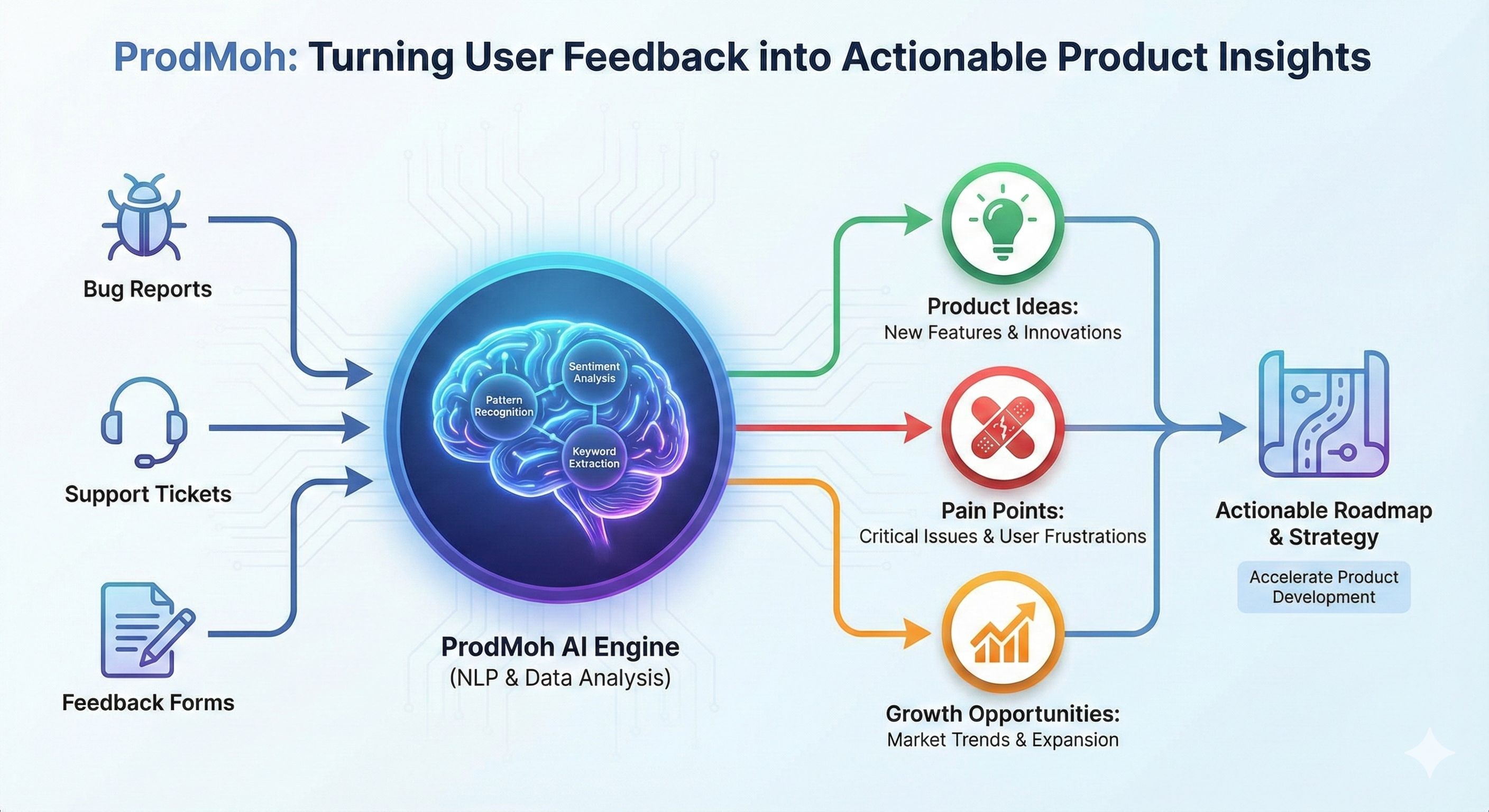
Summarize the source, recurring themes, strongest pain point, counter-signals, and evidence limitations. Redact confidential and personally identifiable information.
Build one case study that lets an employer inspect how you think. Start with customer evidence, make a product decision, produce a structured PRD, document validation and guardrails, and explain what you would measure next.
An AI PM portfolio project is an evidence-backed case study showing how you turn an ambiguous customer problem into a defensible product decision. The goal is not to display how many AI tools you used. The goal is to make your judgment, requirements quality, validation thinking, and responsible use of AI inspectable.
A certificate and a portfolio answer different hiring questions. Treat them as complementary forms of evidence rather than interchangeable signals.
| Hiring question | Course certificate | AI PM portfolio project | Verified workflow credential |
|---|---|---|---|
| Did this person complete structured learning? | Often demonstrates this | Does not necessarily demonstrate this | Does not claim course completion |
| Can I inspect their product judgment? | Only if applied work is included | Yes, when evidence and tradeoffs are shown | Confirms a defined workflow was completed |
| Can they explain AI-specific risk and evaluation? | Depends on the curriculum | Visible in the case study | Supported by PRD and Canvas evidence |
| Can the claim be independently verified? | Depends on the issuer | The artifacts can be reviewed | Public credential URL and unique ID |
Keep the project small enough to understand quickly and deep enough to reveal your reasoning.
Summarize the source, recurring themes, strongest pain point, counter-signals, and evidence limitations. Redact confidential and personally identifiable information.
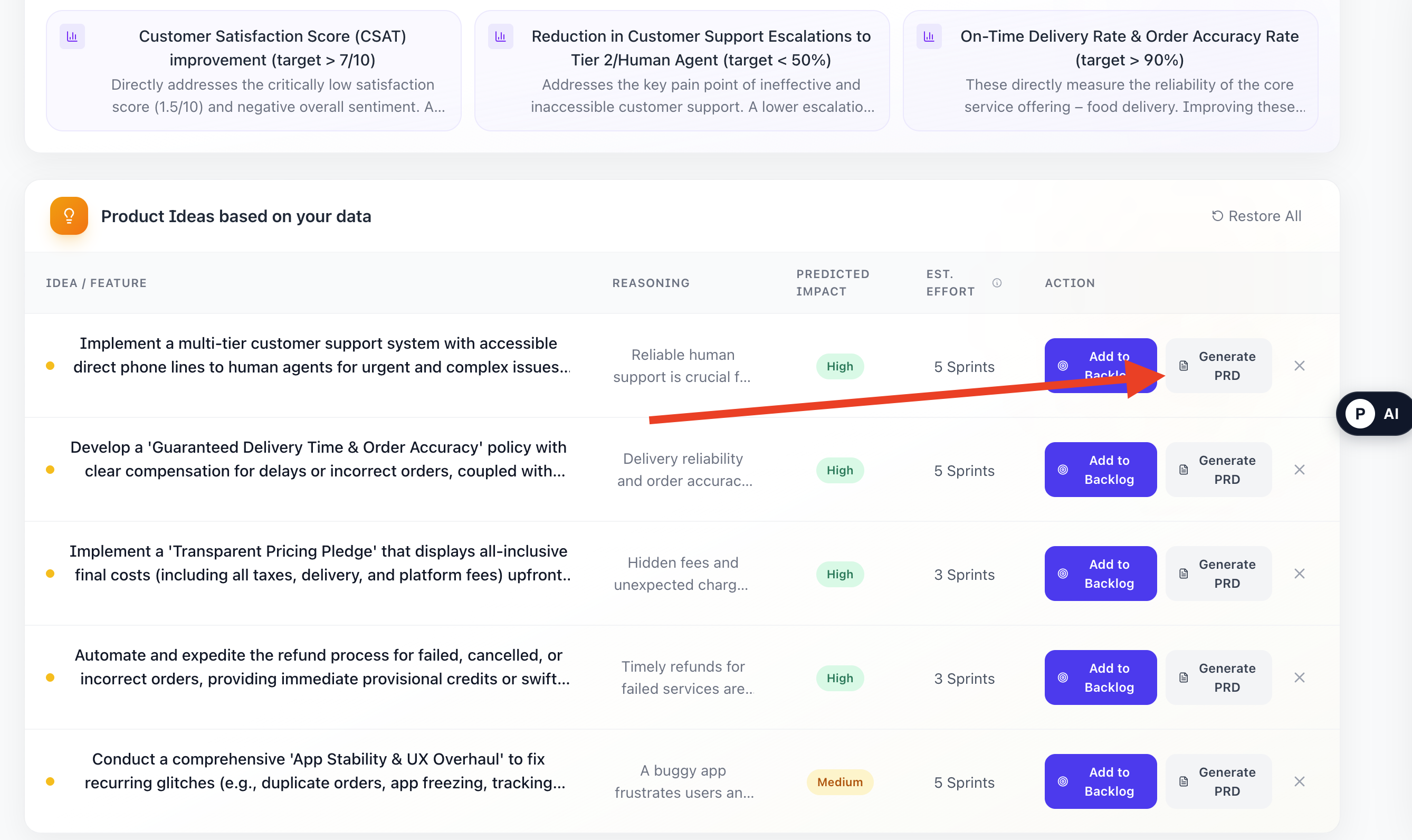
Show the selected problem, target user, scope, user stories, measurable outcomes, acceptance criteria, constraints, risks, and AI evaluation requirements.
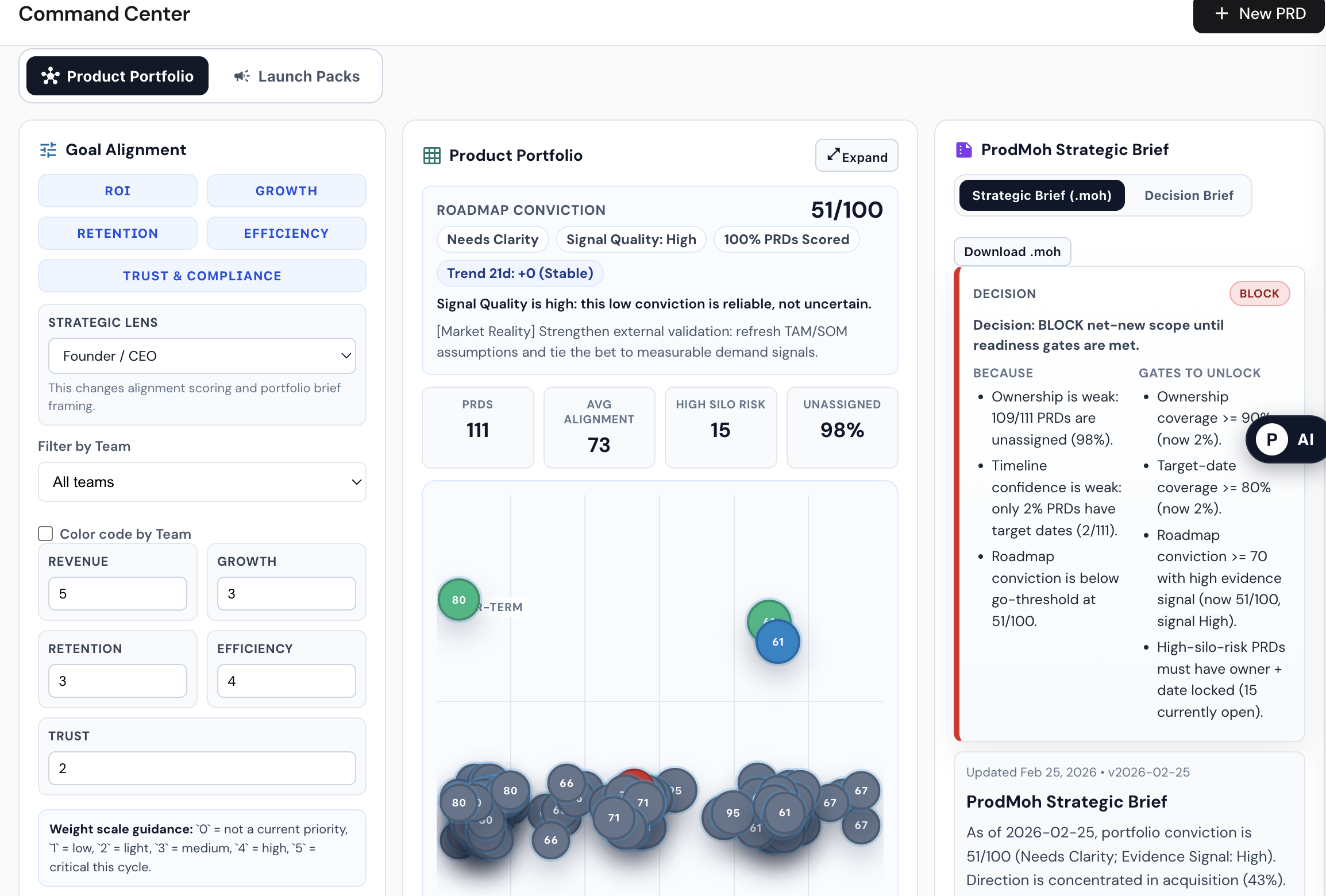
Explain strategic fit, likely impact, assumptions, alternatives, risks, readiness, and the final recommendation: proceed, test, defer, or reject.
Package the work so a reviewer can understand the project in one minute, then inspect the underlying reasoning if interested.
Use this structure for a portfolio page, presentation, Notion document, or interview walkthrough.
Project title
One sentence describing the customer problem and decision.

1. Context
- Target user
- Product or scenario
- My role
- Project status: concept, simulated case, internal project, or shipped work

2. Evidence
- Feedback source and scope
- Strongest recurring themes
- Counter-signals and limitations
- Privacy or data-use constraints

3. Product decision
- Opportunity selected
- Alternatives considered
- Prioritization logic
- Assumptions that still need validation

4. Structured PRD
- Goal and non-goals
- User stories and acceptance criteria
- Success metrics
- Constraints, risks, and dependencies

5. AI evaluation and guardrails
- Expected AI behavior
- Failure cases
- Quality threshold
- Human-review points
- Monitoring and rollback criteria

6. Product Canvas conclusion
- Strategic fit
- Expected impact
- Readiness gaps
- Proceed, test, defer, or reject

7. Reflection
- What AI accelerated
- What AI got wrong
- Where I applied judgment
- What I would test next

8. Verification
- Portfolio artifacts
- Public credential URL, if earned
Use a short decision narrative. Spend less time describing screens and more time explaining evidence, tradeoffs, uncertainty, and evaluation.
Describe the work accurately. Use measured outcomes only when you have real implementation data.
Include the original problem, privacy-safe customer evidence, synthesis, prioritization logic, a structured PRD, success metrics, AI evaluation and guardrails, a Product Canvas decision, and your reflection on tradeoffs.
Use public reviews, synthetic non-confidential feedback, or data you are authorized to analyze. Label the project honestly as a concept or simulated case, state the evidence limitations, and describe outcomes as targets rather than achieved results.
They prove different things. A course certificate usually proves learning completion; a portfolio project lets an employer evaluate applied judgment. The strongest combination is structured learning plus inspectable work.
Only if you are authorized to use it, and you should still remove confidential information and personal identifiers before publishing. Otherwise, use public, synthetic, or properly anonymized evidence.
Yes. Describe the work and verification accurately. Do not invent adoption, revenue, retention, or efficiency outcomes that were not measured.
No. It gives employers more concrete evidence to evaluate, but hiring also depends on experience, communication, judgment, role fit, and interview performance.
Start with customer evidence. Produce the PRD, document your decision, complete the Product Canvas review, and turn the workflow into a privacy-safe case study.